
When your cycling brand's next collection demands a fabric that repels rain from the saddle yet vents body heat during a climb, the benchmark that keeps surfacing in technical briefs is bike shorts gore. It represents a class of materials where waterproofing and breathability coexist without sacrificing the four-way stretch required for an aggressive riding position. For product developers and sourcing managers, the real question isn't whether Gore-level fabrics matter—it's how to achieve that performance cost-effectively and reliably across production scales.
Content
Conventional woven cycling shorts with a DWR finish lose repellency after a few washes and feel clammy during sustained efforts. The Gore benchmark solves this with a permanently bonded membrane that keeps liquid water out while allowing moisture vapor to escape. Rider reviews consistently praise a "light, stretchy, and water-resistant bum" that doesn't overheat. For a brand, this means specifying a fabric with a hydrostatic head of at least 15,000 mm and an MVTR of no less than 10,000 g/m²/24h. These two figures—waterproofness and breathability—are the non-negotiable starting point. Without them, a short fails to manage the microclimate created by intense pedaling, especially in gravel and cross-country scenarios where weather changes fast.
The expanded polytetrafluoroethylene membrane relies on a microporous structure where pores are large enough for sweat vapor to exit but small enough to block water droplets. This path delivers consistent head pressure values, but the ePTFE sheet must be laminated with a four-way-stretch carrier fabric to accommodate cycling movements. Pure ePTFE alone lacks the elongation required for a riding position, so fabric engineers pair it with a polyamide or polyester woven face with at least 20% elongation. Supply chain constraints and higher material costs often push brands to explore alternatives that maintain performance while simplifying sourcing.
Instead of a stretched film, this route uses electrospun nanofibers to create a dense, non-woven network with controlled porosity. The result is a thinner, lighter membrane that often exceeds the moisture vapor transmission of traditional ePTFE at similar water pressure ratings. For the product manager evaluating samples, this translates into a short that feels less like a rain shell and more like a high-stretch knit, without losing the functional protection on the saddle panel. We have integrated this approach into our nano breathable black membrane technology for cycling shorts, which targets the sweet spot between high aerobic breathability and sustained waterproof integrity during multi-hour rides.
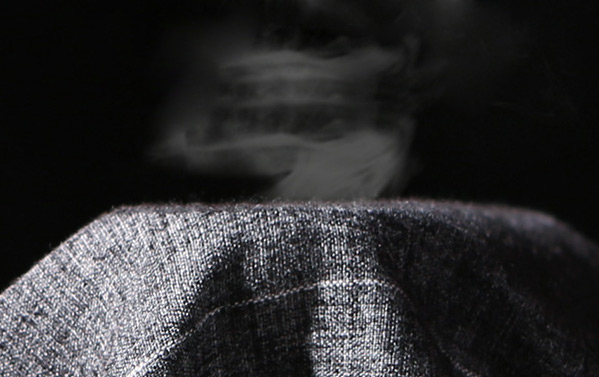 Nano breathable black technology - Yanjing Textile Technology(Jiangsu) Co., Ltd.Nano breathable black technology - Yanjing Textile Technology(Jiangsu) Co., Ltd.View Product →
The membrane alone is only half the story. How it bonds to the face fabric and inner lining determines hand feel, packability, and long-term delamination risk. A 2-layer fabric leaves the membrane exposed inside, requiring a separate liner short—workable but less elegant. A 2.5-layer construction prints a protective micro-pattern directly onto the membrane back, cutting bulk. A 3-layer sandwich fully bonds face, membrane, and a protective inner scrim, yielding the highest durability. For winter or mountain biking shorts, 3-layer makes sense; for summer road and gravel, 2.5-layer often wins on weight. For a deeper comparison, see our guide to 2-layer vs 3-layer fabrics. Regardless of layer count, precise lamination pressure and temperature control prevent air pockets and peeling. Our multi-layer lamination technology for durable fabric bonding is engineered to maintain bond strength after repeated stretch cycles, directly addressing the high-movement demands of cycling.
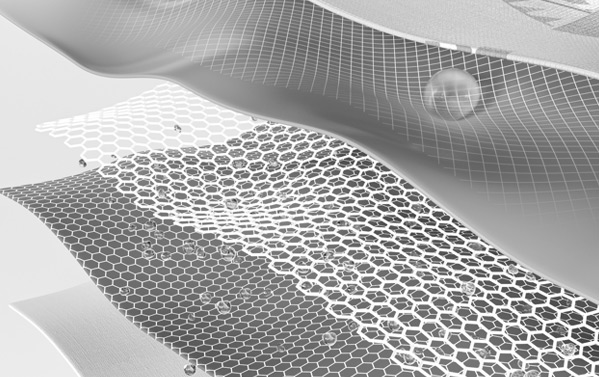 Multi-layers lamination technology - Yanjing Textile Technology(Jiangsu) Co., LtMulti-layers lamination technology - Yanjing Textile Technology(Jiangsu) Co., Ltd.View Product →
The saddle and rear thigh area must withstand sustained water pressure from precipitation and road spray. A minimum of 15,000 mm is the B2B specification for "Gore-level" shorts; anything below fails field testing in wet conditions. While full-body wading isn't required, the measurement refers to the static column test. More meaningful is dynamic testing where fabric stretches while under spray—a protocol worth requesting from mills. If you need a primer on numeric ratings, our understanding waterproof ratings (10K vs 20K) explain the methodology behind the numbers.
An MVTR of at least 10,000 g/m²/24h (JIS L 1099 B1 or inverted cup) is the baseline. The ideal fabric dumps moisture even when a rider's core temperature rises above 38°C. The difference between 10K and 15K+ MVTR is felt after the first hour of sustained tempo; higher values reduce the post-ride chill caused by trapped sweat. When evaluating supplier samples, ask for dynamic moisture transmission data—static cup tests often overstate real-world performance.
A cycling short without four-way stretch will bind during each pedal stroke, especially through the hip and glute. The face fabric should exhibit elongation of 20–30% in both warp and weft, with recovery above 90% to avoid bagging. This requirement influences yarn choice: a 40D–70D nylon 6,6 or high-tenacity polyester with a bi-component spiral crimp delivers the right mechanical stretch without elastane that degrades under UV or chlorine.
Seat seams and inner thighs face constant rubbing against saddles and each other. A Martindale abrasion score above 50,000 cycles (12 kPa pressure) is a practical target. Additionally, seam waterproof taping must survive repeated stretch and laundering; 3-layer constructions inherently protect the membrane from abrasion better than 2.5-layer versions. Durability becomes the final filter after initial lab numbers look good.
| Property | Target Value | Relevance |
|---|---|---|
| Waterproofness | ≥ 15,000 mm | Protects saddle zone from rain and spray |
| Breathability (MVTR) | ≥ 10,000 g/m²/24h | Prevents overheating during sustained efforts |
| Stretch (4-way) | Elongation ≥ 20% | Enables unrestricted pedaling motion |
| Abrasion resistance | Martindale ≥ 50,000 cycles | Withstands saddle friction and inner thigh rub |
Lab figures on a spec sheet are only as good as the production consistency behind them. When qualifying a mill for Gore-level cycling shorts, probe the specific lamination line setup: multi-roll presses with closed-loop temperature control reduce delamination rates dramatically. Ask for dynamic rain tower test results, which stretch and flex the fabric under simulated rain—a far more revealing protocol than a static hydrostatic test. Certification matters too; look for the OEKO-TEX and GRS certification guide to ensure materials meet regulatory and sustainability requirements across your target markets. Finally, confirm that the supplier can execute short-run custom color or digital print options, because cycling brands demand seasonal colorways that must match across fabric batches. True Gore-level performance is as much about manufacturing repeatability as it is about raw membrane technology.
 Custom Outdoor Functional Fabric Manufacturers
Military Fabric Suppliers
Custom Outdoor Functional Fabric Manufacturers
Military Fabric Suppliers


 English
 Español
 عربى
عربى 中文简体
中文简体