
Content
A jacket that sheds rain for the first ten minutes and leaves the wearer clammy for the next two hours is not a product solution. It is what happens when a water-repellent finish is chosen without thinking about breathability. The fabric beads water beautifully at first, then the wearer ends up wet from the inside anyway.
Breathable water repellent fabric is designed to avoid that trade-off. Water repellency is handled at the surface by a durable water repellent (DWR) finish, while breathability is preserved in the fabric structure. Rain stays outside in beaded droplets, and sweat vapor keeps moving out. The key conclusion to hold on to: a breathable water repellent fabric is a finishing solution, not a waterproofing system, and it suits a different set of garments than a membrane laminate.
A DWR finish is a low-surface-energy chemistry applied to the outer face of the fabric. It changes the way water behaves: instead of spreading into the weave, rain forms beads and rolls off the surface. The finish does not need to block the fabric; its job is to keep the face dry long enough for the water to fall away. When water can no longer bead and starts wetting out the face fabric, the DWR has worn off and needs to be restored.
Breathability comes from the spaces between yarns. Woven and knit fabrics contain tiny air channels, and moisture vapor moves through them when the temperature inside the garment is higher than outside. A well-applied DWR finish leaves those channels open. This is why a breathable water repellent fabric can feel airy and light while a heavy coating feels sticky. For a closer look at how the chemistry behaves on different fabrics, review how water repellent for fabric works and when to use it.
When the garment needs a higher level of water resistance without a stiff, heavy feel, a breathable membrane can be added under the face fabric. Our nano breathable membrane technology is one such option: it adds a real barrier against wind-driven rain while keeping the hand feel light and the overall weight low.
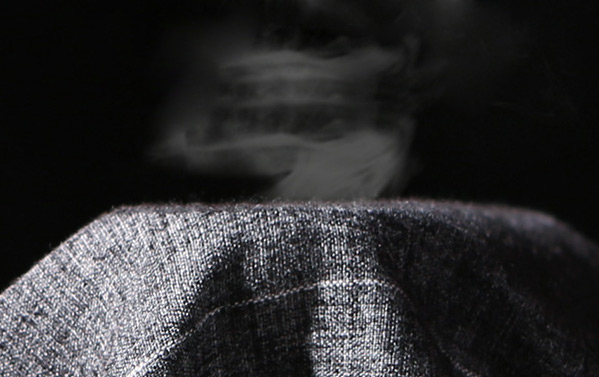 Nano breathable black technology - Yanjing Textile Technology(Jiangsu) Co., Ltd.Nano breathable black technology - Yanjing Textile Technology(Jiangsu) Co., Ltd.View Product →
The words "water repellent" and "waterproof" are often used interchangeably in product marketing, but in fabric specifications they mean very different things. The practical distinction becomes clear when you compare fabric types side by side.
| Fabric type | How water is managed | Typical hydrostatic head | Breathability | Best suited for |
|---|---|---|---|---|
| Water repellent (DWR only) | Rain beads and rolls off; fabric wets out in prolonged rain | Below 1,000 mm | High air permeability and MVTR | Softshells, running jackets, commuting outerwear |
| Water resistant (dense weave plus DWR) | Tight construction slows water entry; finish adds beading | 1,000-5,000 mm | Moderate | Light trekking, everyday outdoor wear |
| Waterproof breathable (membrane or coating) | Membrane blocks liquid water; vapor passes through | 5,000-20,000+ mm | Lower air permeability, high MVTR | Hard shells, ski wear, mountaineering, heavy rain |
Notice what this really means. If the product brief says a garment must survive a full day in heavy rain, a breathable water repellent fabric is not the answer. If the brief is about drizzle, wind, sweat management and all-day comfort, a DWR-finished fabric is often the lighter and better choice.
The standard method for checking repellency is the spray rating test (ISO 4920 or AATCC 22). A new fabric should start at 80 or higher. The number that matters more is the rating after five, ten or twenty launderings, because DWR durability is the most common complaint in the market. A finish that looks excellent in the lab but collapses after the first wash will create returns and warranty claims.
For a breathable water repellent fabric, the hydrostatic head is usually below 1,000 mm, but the figure still tells you how much rain the surface can handle before wetting out. Keep it proportionate to the application and do not pay for a higher number than the garment's use requires.
The MVTR, measured in g/m2/24h, defines how much sweat vapor can pass through the fabric. Read it together with air permeability: a fabric can have a high MVTR yet still feel stuffy if air cannot move through it. Brands that select fabric without looking at both numbers end up with a "breathable" jacket that nobody wants to wear in warm weather.
One procurement risk deserves emphasis: DWR performance changes with every wash. If the garment will be laundered often, specify a target spray rating after a defined number of washes and make the supplier test for it. That is where manufacturing discipline shows. Our own experience solving wash-durability and hand-feel problems in fluorocarbon-free finishes goes back to 2012, and it is exactly the kind of detail that separates a lab approval from real-world durability.
The chemistry of the finish is now as important as its performance. Traditional C6 fluorocarbon DWRs are durable and effective, but they belong to the PFC family that regulators, retailers and outdoor brands are steadily phasing out. C0 finishes are fluorocarbon-free: they meet stricter environmental requirements but need more careful formulation to achieve similar durability and initial beading.
If you sell into the European market, or your customers have public sustainability targets, C0 is often a hard requirement before the factory receives the order. The choice affects cost, wash fastness, certifications and even the hand feel. Our C6 vs C0 DWR guide for B2B buyers compares those factors with test data and is worth reading during the technical review stage.
For brands that want to keep the environmental footprint low without sacrificing performance, our PFC-free eco-friendly finishing technology is the natural starting point. C0 chemistry can be combined with recycled face fabrics and water-based finishing, so the final garment covers both performance and sustainability requirements.
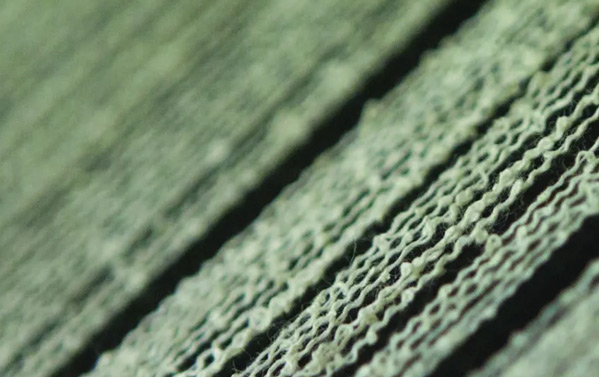 Ece-friendly technology - Yanjing Textile Technology(Jiangsu) Co., Ltd.Ece-friendly technology - Yanjing Textile Technology(Jiangsu) Co., Ltd.View Product →
A cycling jacket washed weekly, a softshell for alpine touring and a workwear garment that sees rough use all need different DWR levels. Do not buy one standard water-repellent fabric for all of them. Define the rain exposure, wash frequency and breathability threshold before requesting samples, and let the supplier tune the formula to the use case.
If the requirement is more than 5,000 mm hydrostatic head, a DWR-only fabric is the wrong tool. That is the point where a breathable water repellent face fabric is paired with a breathable membrane instead. Our multilayer lamination technology is built for that transition: it bonds a face fabric, a breathable membrane and an inner protection layer while preserving a soft hand feel and low weight.
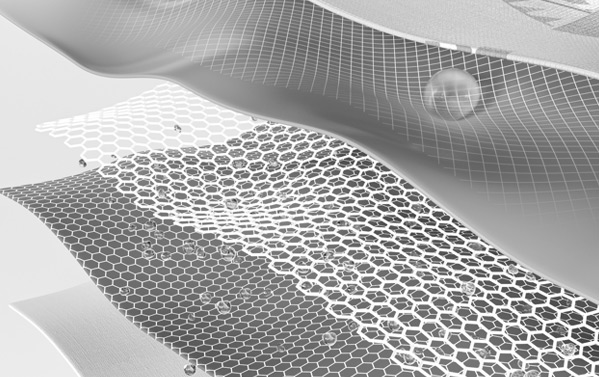 Multi-layers lamination technology - Yanjing Textile Technology(Jiangsu) Co., LtMulti-layers lamination technology - Yanjing Textile Technology(Jiangsu) Co., Ltd.View Product →
The difference between a fabric that passes a lab test and one that performs after a full season is manufacturing discipline. A supplier that outsources finishing has limited control over the result. At Yanjing Textile, in-house production covers constant-temperature composite, nylon and polyester digital printing, and lamination, and the Dragon-Tex brand was developed around exactly these functional requirements. When you evaluate samples, ask for proof rather than promises:
These four points filter out most suppliers that cannot deliver consistent results. For the complete maintenance picture, from initial testing to restoring DWR on finished garments, our durable water repellent guide covers test, clean, restore and selection in one practical reference.
Breathable water repellent fabric is a balanced choice, not a compromise. It gives active users the lightweight feel and sweat management they want, while keeping light rain and wind at the surface where they belong. The practical path is simple: define the rain and wash conditions, choose the right DWR chemistry, and verify that the supplier can deliver wash-durable consistency. Get those three decisions right, and the fabric will do its job quietly, season after season.
 Custom Outdoor Functional Fabric Manufacturers
Military Fabric Suppliers
Custom Outdoor Functional Fabric Manufacturers
Military Fabric Suppliers


 English
 Español
 عربى
عربى 中文简体
中文简体