
Content
Pour water onto two polyester jackets that look nearly identical. On one, water forms perfect droplets and rolls off the surface. On the other, the fabric darkens instantly and wets out within seconds. The fiber is the same, yet the behavior is completely different. That gap is the whole story of water resistant polyester: it is not a single material property, but the result of fiber chemistry, fabric construction, chemical finishing, and sometimes membrane lamination.
If you are sourcing polyester for outdoor jackets, workwear, or performance apparel, the practical conclusion is simple. Water resistant polyester is a system, not a yarn type. Treating it as a generic fabric category will lead to field failures, rejected samples, and unhappy end users. What matters is how the fabric is constructed and finished, and what specification you actually put on the datasheet.
The terms are often used interchangeably, but in fabric sourcing they mean very different things. Nail down these three definitions before you look at any swatch.
The phrase "water resistant polyester" sits somewhere in the middle of this spectrum. Most commercial fabrics labeled water resistant are either tightly woven constructions with a DWR finish, or lightweight polyester shells bonded to a membrane. Knowing which one you are buying can be the difference between a jacket that survives a commute and one that fails on the first real downpour.
Polyester has a genuine head start over natural fibers. Its standard moisture regain is around 0.4% under normal conditions, compared with roughly 8% for cotton and up to 16% for wool. The PET polymer backbone contains no strongly hygroscopic groups, so water molecules have very little to cling to. That is why polyester dries fast, does not swell when wet, and resists absorbing moisture in the first place.
But fiber-level resistance is not fabric-level resistance. Woven polyester has capillary gaps between yarns and filaments, so liquid water can wick through even though the fibers themselves stay dry. A dense taffeta weave will shrug off a drizzle far better than an open knit. Fabric construction determines the baseline; finishing and lamination determine the real performance.
The classic way to make polyester water repellent is to apply a durable water repellent finish. DWR chemicals create a low-surface-energy layer on the fabric, so water beads up and rolls off instead of spreading and wetting the yarns. Two chemistries dominate today: fluorocarbon-based finishes, usually C6, and fluorine-free C0 finishes.
C6 DWR tends to offer slightly better initial performance and wash durability. C0 finishes are the more sustainable choice, and they have improved enormously over the past decade, but they generally need a denser face fabric or a higher initial application level to match fluorocarbon results after washing. If you are comparing suppliers, ask exactly which chemistry they use and what after-wash spray ratings they can guarantee. For brands with strict environmental requirements, suppliers that control eco-friendly finishing technology are in a much better position to develop a C0 formula that still meets your durability targets.
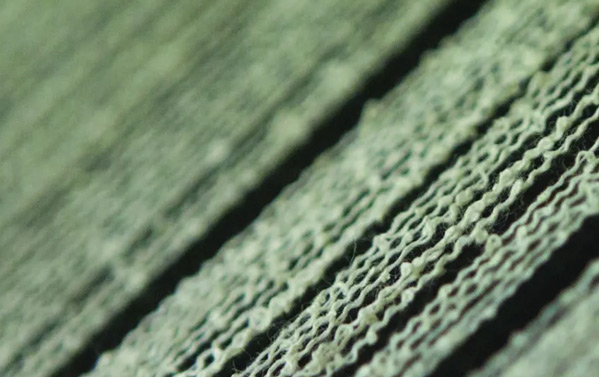 Ece-friendly technology - Yanjing Textile Technology(Jiangsu) Co., Ltd.Ece-friendly technology - Yanjing Textile Technology(Jiangsu) Co., Ltd.View Product →
When a polyester face fabric needs to block water under pressure — rain, snow, wind-driven water — it needs a barrier, not just a finish. This is where multi-layer lamination technology comes in. A microporous or hydrophilic membrane is bonded to the polyester shell to create a composite that stops liquid water from penetrating while still allowing moisture vapor to escape.
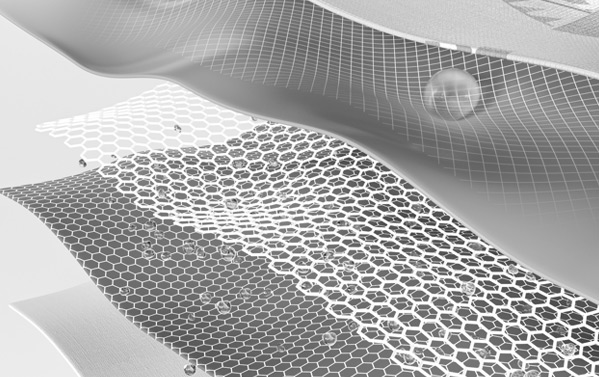 Multi-layers lamination technology - Yanjing Textile Technology(Jiangsu) Co., LtMulti-layers lamination technology - Yanjing Textile Technology(Jiangsu) Co., Ltd.View Product →
In practice this produces 2-layer, 2.5-layer, and 3-layer constructions. A 3-layer fabric bonds face, membrane, and backer into one durable system; 2-layer fabrics are more flexible and are often paired with a separate liner. For polyester rain shells, the quality of the lamination matters as much as the membrane itself. Poor lamination causes delamination, stiff hand feel, and inconsistent waterproofing from one roll to the next.
Manufacturers can also make polyester more water resistant by increasing weave density, calendering the surface to flatten it, or applying a thin polyurethane coating. These methods are cheaper than membrane lamination and work well for umbrellas, lightweight packable parkas, and commuter shells. They are not, however, a substitute for a membrane when the end use involves sustained rain at altitude or high physical activity.
The most common way to quantify water resistance is the hydrostatic head test. A column of water presses against the fabric, and the value in millimeters indicates how much pressure the fabric withstands before three drops penetrate. Higher numbers mean better resistance.
| Hydrostatic head | Typical use | Real-world behavior |
|---|---|---|
| 1,000–3,000 mm | City jackets, commuter shells | Sheds light rain and splashes for short periods |
| 5,000–10,000 mm | Day hiking, mountain trekking | Handles moderate sustained rain when paired with a good DWR finish |
| 10,000–20,000 mm | Alpine shells, waterproof ski jackets | Reliable in prolonged rain and wet snow |
| 20,000 mm and above | Extreme conditions, professional use | Designed for prolonged exposure and high water pressure |
For "water resistant polyester" without a membrane, the hydrostatic head is often left unspecified or sits below 1,000 mm. If a supplier only says "water resistant" without a number, assume it is a surface finish rather than a true barrier. A proper purchase specification should name the test standard — commonly ISO 811 or AATCC 127 — and a minimum value for both new and after-wash samples.
The most common buying mistake is expecting water resistant polyester to stay that way forever. It will not. DWR finishes are sacrificial by design. Machine washing strips them, dirt and body oils reduce their effectiveness, and abrasion wears them down. The water beading effect a new jacket shows after a few wears is rarely the same after ten wash cycles.
What suppliers can do is engineer for a specific durability target. A well-formulated C6 DWR on a tightly woven polyester can often hold acceptable spray ratings for 20 or more home launderings. C0 options are improving but usually require a higher initial performance or a denser construction to reach the same after-wash numbers. For garments with a membrane, the DWR is the first line of defense and the membrane is the safety net, so keeping the DWR alive with proper care is essential to the overall system. Practical guidance on when and how to restore a worn finish is available in our durable water repellent guide.
Vague adjectives will not survive the sampling stage. Put numbers on the table:
The supplier's technical depth matters as much as the numbers on the datasheet. If breathable waterproofing is the target, asking whether a mill controls its own nano breathable membrane technology is a practical way to tell a manufacturer from a trader. A supplier that can answer questions about lamination defects, after-wash DWR performance, and membrane breathability is far more useful than one that simply reads claims off a finished roll.
 Nano breathable black technology - Yanjing Textile Technology(Jiangsu) Co., Ltd.Nano breathable black technology - Yanjing Textile Technology(Jiangsu) Co., Ltd.View Product →
Experience also shows up in field results. Yanjing Textile has manufactured functional polyester since 2010, and our process history includes solving the wash-durability and anti-snag problems of fluorine-free waterproofing back in 2012, as well as developing China's first 100% recycled polyester fabrics for a global sportswear brand in 2016. That kind of track record means the pitfalls of water resistant polyester development have already been encountered and solved internally.
Before you commit to a mill, ask for lab reports on the exact batch being quoted rather than a generic data sheet, and request a wash-durability test if your end use needs one. Our overview of water- and windproof fabric specifications will help you build the checklist, and the article on what capabilities a fabric supplier should have for premium outdoor programs is a useful benchmark when comparing mills.
Polyester is naturally low-absorbing and quick-drying, but fiber characteristics alone are not enough. Real water resistant polyester depends on construction, DWR chemistry, and, where needed, membrane lamination. As a buyer, your job is to convert the phrase "water resistant polyester" into specific numbers: a hydrostatic head, a spray rating after a defined number of washes, a DWR chemistry, and a clear answer on whether a membrane is part of the stack. Do that, and your samples will behave the way your tech pack expects. Leave it vague, and you will receive whatever the mill had on the shelf.
 Custom Outdoor Functional Fabric Manufacturers
Military Fabric Suppliers
Custom Outdoor Functional Fabric Manufacturers
Military Fabric Suppliers


 English
 Español
 عربى
عربى 中文简体
中文简体