
Ask a room full of outdoor buyers what fabric keeps rain out and one name usually arrives first. The expanded PTFE membrane behind Gore-Tex has set the benchmark for waterproof breathable performance for decades, and it earned that position honestly. A benchmark, though, is not the same thing as the only option. Rising material costs, PFAS restrictions, longer development cycles and a growing appetite for softer, lighter, more sustainable shells have pushed brand teams to look seriously at Gore-Tex alternatives instead of quietly renewing the same specification every season.
We build functional fabrics for a living, so we sit on the manufacturing side of this conversation every week. The most useful thing we can tell you is simple: an alternative is not one fabric you drop into a spec sheet. It is a system made of four decisions — the membrane, the face fabric, the lamination and the durable water repellent finish. Understand those four and the comparison stops being emotional.
Content
The original technology is a microporous expanded PTFE membrane bonded behind a protective face fabric and finished with a water repellent treatment that makes rain bead and roll off. When a buyer asks for an alternative, they are usually asking for a combination of things: comparable hydrostatic head and breathability, a lower landed cost, PFC-free chemistry, quieter and softer hand feel, faster sampling, or a supply chain that does not depend on a single global licensor.
Most credible replacements fall into four membrane families. None of them is universally better, because each one trades something away.
| Membrane family | How it moves moisture | Strengths | Trade-offs |
|---|---|---|---|
| Expanded PTFE | Microporous; vapour passes through open pores | Highest breathability-to-weight ratio, long field record | Highest cost, PFAS scrutiny, pores need a strong DWR |
| Microporous PU | Microporous; air and vapour pass through pores | Balanced performance and price, easy to laminate | Pores can clog with oils and dirt |
| Hydrophilic PU or TPU | Solid film; moisture diffuses through polymer chains | Stretch, quiet hand, no pore clogging, easy PFC-free build | Lower peak breathability at high exertion |
| Electrospun nanofibre | Nanoscale fibre web with very high surface area | Very high breathability, light and soft | Newer process, demanding bonding control |
Knowing which family you are comparing makes the rest of the evaluation far faster. A hydrophilic film will never match an expanded PTFE or electrospun web on raw breathability during hard climbing, yet it often wins on stretch, cost and fluorine-free construction. That trade may be perfect for a commuter shell and completely wrong for a winter alpine jacket.
When a brief lands with the phrase "something like Gore-Tex, but...", we narrow it to four measurable questions before anyone touches a loom.
A membrane is only as good as the package around it. Delamination, pinholes, uneven adhesive spread and print distortion are the failures we see most often in alternative shells, and none of them are caused by the membrane itself. They come from bonding conditions, face fabric selection and finishing discipline.
We run lamination in a temperature- and humidity-controlled plant precisely because those two variables decide whether a three-layer laminate survives twenty washes or starts to bubble at the shoulder seam.
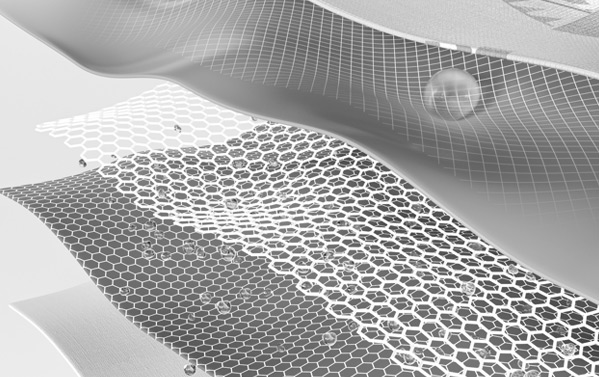 Multi-layers lamination technologyArt, strict control of each ring, T-one technology. The principle is to combine the sound properties of different materials through advanced The core of this technolog...View Product →
Sustainability is the area where a replacement fabric can outperform the incumbent rather than merely match it. Fluorine-free water repellency, recycled face fabrics and responsible process control are now routine requirements in European retail briefs, and they are easier to meet when the mill controls coating, lamination and finishing under one roof instead of sourcing them across three suppliers.
We have been working on fluorine-free waterproofing since 2012, when the hard problems were not repellency but wash durability and the hand-scratch marks that appear when a finish rubs off too easily. Those lessons now sit in our everyday production, alongside recycled fabric programmes developed for international retail partners.
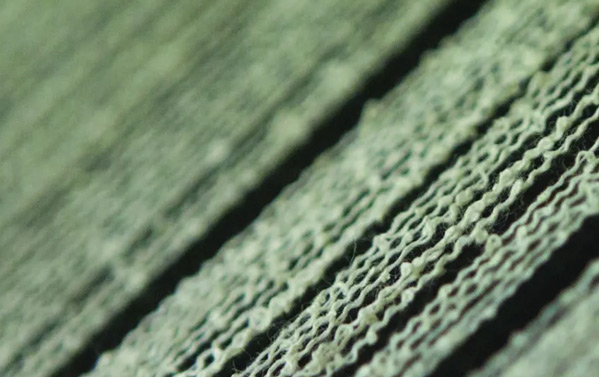 Ece-friendly technologyThe green technology system is a comprehensive solution aimed at reducing carbon emissions and achieving sustainable development, reflecting a commitment to environmen...View Product →
Weight is the other place alternatives pull ahead. Electrospun and nano-structured constructions deliver high breathability from a very thin layer, which lets a designer shave grams off a trail running or cycling shell without giving up rain protection. The catch is process control: nanofibre webs punish inconsistent bonding, so this route rewards buyers who stay close to the mill during sampling rather than approving a swatch remotely.
 Nano breathable black technologyYanjing Textile independent research and development of dragon film technology, from the "people - clothing -Starting with the "environment" system, a non-inlet film t...View Product →
The same specification is rarely right across a whole collection. A rough guide from our own sampling work:
Before you sign off on any replacement, ask your supplier for these seven items in writing.
Yanjing Textile Technology (Jiangsu) Co., Ltd. has been producing functional fabric in Suzhou since 2010, and our Dragon-Tex ranges cover everything from extreme outdoor protection to everyday city wear. Because we hold lamination, nylon and polyester digital printing in house, membrane, face fabric, print and finish can be developed as one system rather than assembled from four vendors. That is also why we can talk about the boring parts — bonding temperature, wash durability, hand feel — with the same confidence as the headline numbers.
If your current shell is performing, keep it. Nobody should change a working specification for the sake of novelty. But if cost, PFAS compliance, hand feel or lead time is starting to bite, the alternative path is well mapped by now. Send us the fabric you are trying to replace, tell us the end use and the target price, and we will tell you honestly which membrane family, which construction and which finish gets you closest.
 Custom Outdoor Functional Fabric Manufacturers
Military Fabric Suppliers
Custom Outdoor Functional Fabric Manufacturers
Military Fabric Suppliers


 English
 Español
 عربى
عربى 中文简体
中文简体