
Lamination is one of those processes that looks simple from the outside and turns complicated the moment you actually try it. Two materials go in, one comes out, and the finished roll either performs for years or starts to bubble and separate after a handful of washes. Since 2010 we have been bonding membranes, films, knits, and backers for military and high-performance outdoor programs, and we have watched both outcomes play out on real production lines. This guide walks through how to laminate fabric in practice, from the chemistry of the adhesive to the temperature, pressure, and speed settings that decide whether the bond holds.
Content
Lamination is the process of bonding a functional layer to a textile surface using heat, pressure, adhesive, or a combination of all three. The functional layer might be a waterproof and breathable membrane, a microporous film, a fleece backer, a printed overlay, or a lightweight tricot liner. The result is a composite material that behaves as one fabric rather than two.
It helps to separate lamination from coating, because the two are often confused. In coating, a polymer is applied directly onto the fabric surface as a liquid or paste and then cured in place, so the fabric itself becomes the barrier. In lamination, a separate layer supplies the performance, and the adhesive only has to hold the layers together without blocking breathability.
Brands choose lamination for a short list of reasons:
Most laminated fabrics in the outdoor and protective world follow a three-part sandwich: a face fabric, a membrane or film, and either a liner (3-layer) or a printed protective dot pattern (2.5-layer). Two-layer constructions bond the membrane to the face and rely on a separate loose lining inside the garment.
The bonding method you choose determines the equipment, the cost, and the failure modes you will spend the next year chasing. These are the four routes we run most often.
| Method | How the bond forms | Typical use | Points to watch |
|---|---|---|---|
| Hot-melt adhesive lamination | Adhesive powder, web, or dot coating is activated by heat and pressure in a nip | Breathable membranes, stretch knits, delicate face fabrics | Temperature and dwell time must be tuned per adhesive; dots must stay discrete to keep breathability |
| Flame lamination | A foam or film surface is briefly softened by flame and pressed onto the fabric | Automotive trim, upholstery, thicker foam-backed textiles | Not suitable for thin membranes; hand feel stiffens and process control is critical |
| Liquid adhesive lamination | Solvent-based or water-based adhesive is applied, dried, then bonded under pressure | High-bond-strength applications, technical workwear | Solvent recovery and drying energy add cost; coating weight controls hand feel |
| Thermal calendering | Heat plus roller pressure fuses a thermoplastic film directly to the fabric | Simple film-to-fabric bonds, low-cost liners | Limited to thermoplastic films; risk of surface sheen and shrinkage |
Every line is different, but a stable production sequence looks like this.
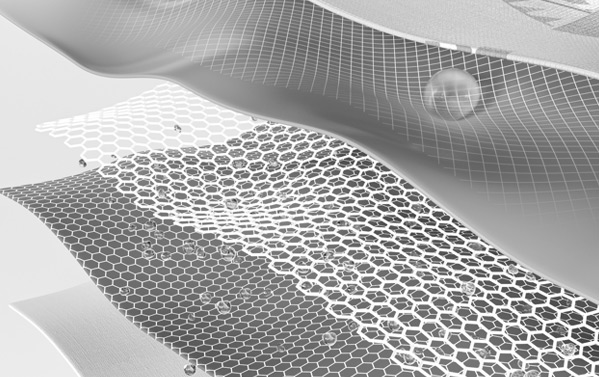 Multi-layers lamination technologyArt, strict control of each ring, T-one technology. The principle is to combine the sound properties of different materials through advanced The core of this technolog...View Product →
The variables that matter most are temperature, pressure, line speed, and adhesive weight. Change one and you change the others. This is why a lamination recipe is never simply copied from one fabric to another.
The same principles apply on a small scale, just with gentler equipment. If you are prototyping or repairing rather than producing, a household iron or a small heat press can work.
For larger pieces, work in sections and overlap your passes slightly, because uneven pressure is the single most common cause of bubbling in home lamination.
Polyurethane films are flexible and quiet, which makes them a good fit for stretch garments and urban outerwear. Microporous polytetrafluoroethylene membranes offer very high breathability per unit of weight but cost more and need careful handling. Polyester-based films sit between the two and resist hydrolysis well in humid climates. Whichever you choose, the membrane thickness and pore structure set the ceiling on breathability, and the adhesive pattern decides how much of that ceiling you actually keep.
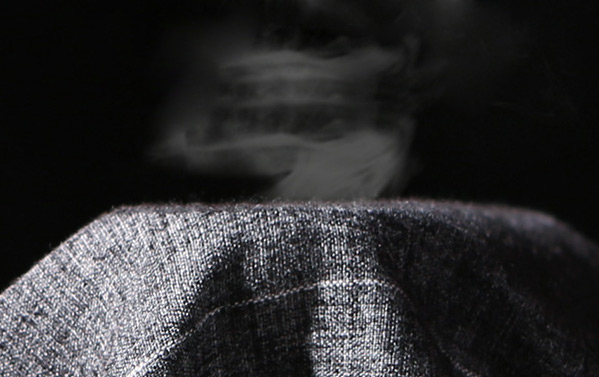 Nano breathable black technologyYanjing Textile independent research and development of dragon film technology, from the "people - clothing -Starting with the "environment" system, a non-inlet film t...View Product →
Discontinuous dot coating preserves breathability, while continuous coating gives stronger, more airtight bonds. Heavier adhesive weights raise peel strength but stiffen the hand. For demanding programs, the right construction is usually a compromise between these two extremes, which is exactly where the choice between 3-layer and 2.5-layer laminated structures becomes a design decision rather than a technical one.
A laminated roll is only as good as the tests behind it. We recommend validating every new construction against a fixed protocol before it goes into bulk production.
| Test | What it reveals | Typical target |
|---|---|---|
| Peel strength | How firmly the layers are bonded | No separation at defined force after conditioning |
| Hydrostatic head | Water resistance of the composite | Matched to the garment's intended exposure level |
| Moisture vapor transmission | Breathability retained after bonding | Adhesive pattern must not close the membrane |
| Wash durability | Bond stability through domestic or industrial laundering | 5 to 10 cycles without bubbling or peeling |
| Cold flex | Cracking risk in low temperatures | No visible damage after repeated flexing below freezing |
Lamination has a reputation problem, and it is partly deserved. Adhesives, solvents, and mixed-material composites are all difficult to recycle. That is changing quickly. Water-based and solvent-free adhesives, C0 durable water repellent finishes on the face fabric, and recycled face materials are now standard requests rather than premium options, and buyers increasingly ask for documentation before they ask for a price.
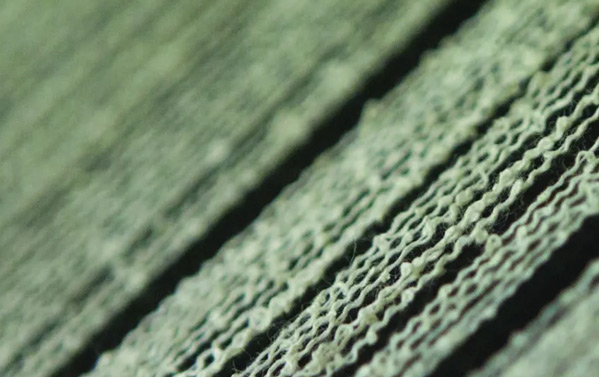 Ece-friendly technologyThe green technology system is a comprehensive solution aimed at reducing carbon emissions and achieving sustainable development, reflecting a commitment to environmen...View Product →
We solved the wash-durability and hand-feel challenges of fluorine-free water repellency back in 2012 and have been building recycled face fabrics into laminated constructions ever since, including the first 100% recycled fabrics developed for a major international retail program in 2016.
You can read every setting and still fail, because lamination depends on controlled conditions: stable temperature across a two-meter drum, consistent tension, clean air, and a team that checks the roll rather than the clock. Our composite facility is temperature and humidity controlled precisely because membranes and adhesives are sensitive to both, and our in-house printing and bonding capacity means a laminated fabric can be developed, sampled, and scaled without handing your specification to three different suppliers.
If you are evaluating how to laminate fabric for a new program, start with a clear performance target, a realistic test protocol, and a partner willing to run the trials with you. You can review our full functional material platform on our fabric technology overview and send us the construction you have in mind.
 Custom Outdoor Functional Fabric Manufacturers
Military Fabric Suppliers
Custom Outdoor Functional Fabric Manufacturers
Military Fabric Suppliers


 English
 Español
 عربى
عربى 中文简体
中文简体