
Ask ten people what thermal clothes are made of and you will get ten answers: merino, polyester, fleece, something with a silver lining. Ask the mill that develops the fabric and the answer becomes more useful. Thermal clothes material is any textile engineered to slow heat loss while still letting moisture escape — and in practice, the structure and finish of a fabric usually decide whether it works more than the fibre name on the label. Here is how we think about it when a brand arrives with a cold-weather brief.
Content
Thermal performance comes from two very different mechanisms, and mixing them up is one of the most common sourcing mistakes we see. The first is passive insulation: trapping still air. Still air is the cheapest insulator available, and almost every thermal fabric is really a structure for holding it — a brushed back, a raised grid, a hollow filament, a lofty knit, a laminated air gap. Add more still air, and you add warmth without adding much weight.
The second is active thermal behaviour. These are materials that reflect body heat back towards the skin, absorb and re-emit infrared, or store and release latent heat. They are additive technologies: ceramic particles spun into the yarn, a reflective print on the inside face, microencapsulated phase-change materials. They can be genuinely effective, but they work best on top of a sound passive structure, not instead of one.
Then comes the factor that quietly decides whether any of it survives a real winter day: moisture. Water held in a base layer takes far more energy to warm than the same mass of fibre, and a saturated fabric collapses the air pockets it was relying on. A thermal material therefore has two jobs at once — hold warmth in, move vapour out.
Polyester remains the backbone of next-to-skin thermal clothing, and for good reasons. It absorbs very little water, dries quickly, takes a brushed or grid structure easily, and holds warmth at modest weights — 120 to 180 gsm is a typical base-layer range. Hollow-core filaments trap more air per gram, while grid and channel structures move moisture along defined paths instead of letting it pool. It is also the most cost-stable option when a programme runs to millions of metres.
Nylon brings higher tensile and abrasion strength, a smoother, cooler touch, and excellent compatibility with membranes and linings. It costs more than polyester and takes up moisture slightly more readily, so it is more often found in outer thermal layers, linings and stretch wovens than in a pure base layer.
Merino earns its place through crimp. The fibre's natural waves create air pockets, it buffers moisture vapour rather than blocking it, and it resists odour over multiple wears. The trade-offs are price, lower abrasion resistance in thin constructions, and slower drying. Blending merino with polyester or nylon at 30 to 50 percent is a practical compromise that keeps much of the comfort while improving durability and drying time.
A small elastane content — usually 5 to 12 percent — does more for warmth than most people expect, because a base layer that stays in contact with the skin wicks continuously instead of forming an air channel that traps vapour. Beyond the blend, the structure matters: a raised grid on the inner face, a brushed back on a jersey, or a double-knit with an air channel will each behave differently at the same weight.
| Material | Warmth for weight | Moisture handling | Durability | Typical thermal use |
|---|---|---|---|---|
| Brushed polyester knit | Good | Excellent | High | Base layers, pyjama-weight thermals |
| Hollow-core polyester | Very good | Very good | High | Lightweight cold-weather next-to-skin |
| Nylon with membrane | Good (windproof) | Good | Very high | Shell and midlayer linings |
| Merino wool | Very good | Excellent (buffered) | Moderate | Multi-day wear, travel, hiking |
| Poly-wool blend | Very good | Excellent | High | Balanced base and mid layers |
| Grid fleece (poly/elastane) | Good per gram | Very good | High | Active midlayers under a shell |
Four measurements answer most sourcing questions on thermal material. Thermal resistance, often expressed in clo, tells you how much insulation a fabric provides. Air permeability, in mm/s, tells you how much wind will strip that insulation away. Moisture vapour transmission rate and RET describe how quickly vapour passes through, which decides whether the warmth stays comfortable. Weight in gsm ties them together but never predicts them on its own.
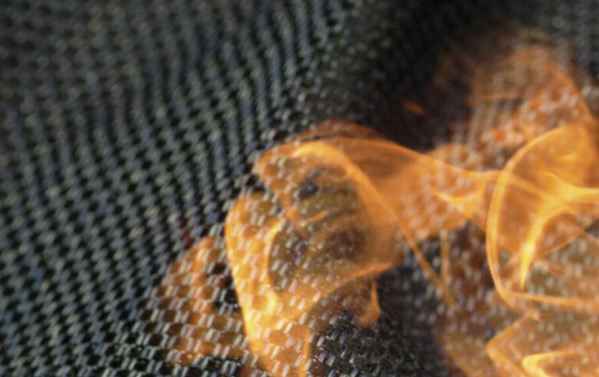 Thermal Management Technology for Protective FabricsReview an overview of insulation, cold resistance, flame retardancy and heat regulation for high-performance protective fabrics used in firefighting applications.View Product →
If you want a deeper walkthrough of the physics behind base layers, our team wrote a fuller explanation of how thermal underwear works, including the insulation, moisture and fabric science that sits behind these figures.
Most thermal programmes can be planned in three weight bands, and getting the band right matters more than the fibre choice:
Fit is the second half of that decision. A thermal layer that is too loose loses contact and stops wicking; one that is too tight compresses the structure and loses the air it was holding. If you are building a lighter end of range, our lightweight thermal fabric page shows the weights and structures we run most often for that band.
Two fabrics with identical composition can differ by several degrees of comfort once finishing is applied. Brushing depth and consistency control how much still air the inner face holds; anti-pilling treatment decides whether that surface survives twenty washes; a well-bonded membrane adds windproofing that protects the insulation underneath.
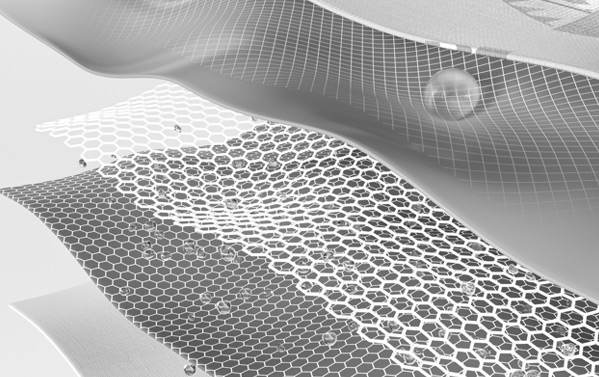 Multi-Layer Lamination Technology for Functional FabricsExplore tension-free bonding and controlled lamination for multilayer fabrics that support warmth, flame retardancy and durable outdoor and activewear applications.View Product →
Lamination deserves particular care in thermal garments. Glue lines that are too heavy stiffen the hand and block vapour; too light and the layers separate after washing. Because we run our own temperature- and humidity-controlled lamination lines, we can tune bonding for a soft drape and a durable bond at the same time, which is usually the difference between a sample that impresses and a bulk order that holds up.
Recycled polyester is now a realistic default for thermal knits rather than a niche option, and mechanically recycled feedstock performs close to virgin fibre in brushed structures when the yarn is specified carefully. The bigger sustainability wins in this category are less visible: dope-dyed yarns that skip a dyeing step, fluorocarbon-free durable water repellents, and mono-material constructions that can be recycled at end of life.
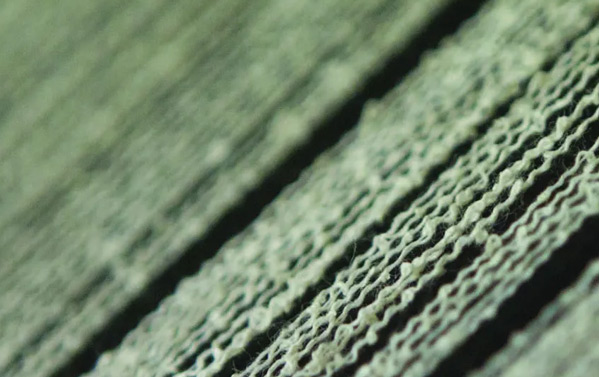 Green Textile Technology for Recyclable and Bio-Based FabricsReview recyclable design, degradable materials, bio-based feedstocks and low-water dyeing approaches for more sustainable functional fabric development.View Product →
We have been working on this since 2012, when we solved the wash-durability and handling challenges of fluorine-free water repellency, and since 2016, when we developed one of China's first 100 percent recycled fabric ranges. Those lessons carry directly into thermal base layers and midlayers.
None of these steps is glamorous, but together they prevent the classic outcome where a fabric meets its specification on paper and still feels cold on a Tuesday morning in February.
We have been developing functional fabrics in Suzhou since 2010, for military programmes, outdoor brands and everyday workwear, and thermal materials remain one of the categories where small structural choices make the biggest difference. If you are weighing polyester against a wool blend, or deciding how much loft you can add without losing drape, send us the brief and the temperature range. We are happy to talk through what we would make, and why.
 Custom Outdoor Functional Fabric Manufacturers
Military Fabric Suppliers


 English
 Español
 عربى
 中文简体
