
Ask ten people what "waterproof and breathable material" means and you will usually get ten answers, most of them about jackets. The technical answer is quieter: it is a textile engineered to stop liquid water from passing through while still letting water vapour escape. Get both halves right and the wearer stays dry in a downpour without overheating. Get either half wrong, and they notice within the first hour.
We have been developing these materials at Yanjing Textile Technology (Jiangsu) Co., Ltd. since 2010, producing under the DragonTex® brand for military programmes, outdoor brands, workwear suppliers and public-service projects. What follows is the practical version of that experience: how the material works, how the main constructions compare, and what is worth checking before you commit to a specification.
Content
Two independent properties sit inside the phrase, and buyers who treat them as one number usually end up with the wrong fabric.
Waterproofness is measured as hydrostatic head, normally to ISO 811, and expressed in millimetres of water column. There is no single legal threshold, but in practice 1,300 mm is a minimum for a claim, 10,000 mm handles steady rain and moderate pressure, and 20,000 mm and above is what you want where straps, kneeling or sustained wind-driven rain press water against the surface.
Breathability is measured as moisture vapour transmission rate (MVTR, g/m²/24h) or as resistance to evaporative heat transfer (RET, where lower is better). Roughly: 5,000 is basic, 10,000 to 15,000 suits general outdoor use, and 20,000 and above is for high-exertion activity. Vapour transport is not the same thing as airflow — a fully windproof fabric can still move a great deal of moisture — which is why air permeability tests and breathability tests tell you different stories.
Almost every commercial product is one of three architectures, or a hybrid of them. Each has a different cost, hand-feel and durability profile.
A thin functional film is bonded to the face fabric. Microporous membranes rely on pores far smaller than a water droplet but far larger than a vapour molecule, so liquid is blocked and vapour diffuses through. Non-porous hydrophilic membranes work differently: they transport moisture by chemical diffusion through the polymer itself, which makes them less vulnerable to contamination from sweat, salt and detergents.
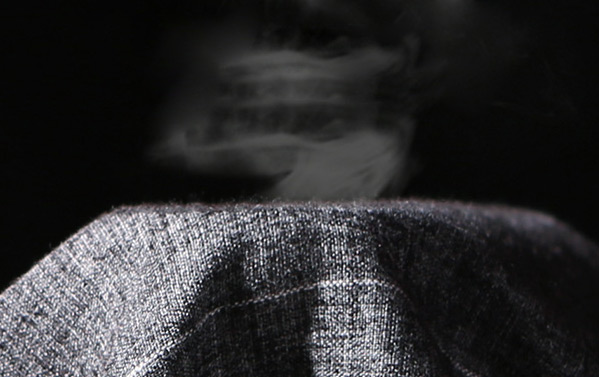 Dragon Film Waterproof Breathable MembraneA proprietary nano-porous membrane that blocks liquid water while allowing sweat vapor to pass, with high waterproofing and breathability claims for active and urban use.View Product →
Rather than a separate film, a polymer coating is applied directly to the back of the fabric — microporous polyurethane for a drier feel, or a solid hydrophilic coating for tougher, simpler constructions. Coatings are generally the more economical route and suit volume programmes, but breathability tends to sit lower than a good membrane. Wet coating, which we adopted in 2011, gives a dense, well-anchored film with good resistance to washing and flexing.
The membrane or film is combined with one or more textile layers. A two-layer build bonds the membrane to the face fabric and needs a separate lining. A 2.5-layer build adds a printed or sprayed protective layer instead of a lining, saving weight and packing volume. A three-layer build sandwiches the membrane between face and backer, giving the best durability and the most predictable performance over a long service life.
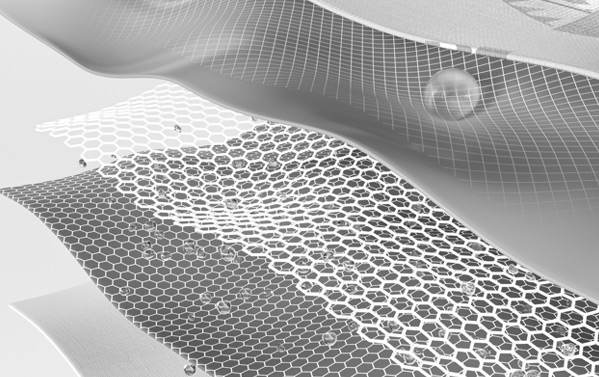 Multi-Layer Lamination Technology for Functional TextilesA tension-free bonding process for two-, 2.5- and three-layer builds that aims to preserve fabric properties, strength and surface quality in functional textiles.View Product →
The table below is the shorthand version we use in early conversations with customers. It is a starting point, not a specification.
| Construction | Typical hydrostatic head | Typical breathability (MVTR) | Best suited to |
|---|---|---|---|
| 2-layer laminate | 10,000–20,000 mm | 10,000–15,000 g/m²/24h | General outerwear, commuting, workwear |
| 2.5-layer laminate | 10,000–20,000 mm | 12,000–18,000 g/m²/24h | Packable shells, trail running, cycling |
| 3-layer laminate | 15,000–30,000 mm | 15,000–25,000 g/m²/24h | Mountaineering, military, long-life shells |
| Microporous coating | 5,000–15,000 mm | 5,000–10,000 g/m²/24h | Entry-level outdoor, light duty apparel |
| Hydrophilic coating | 10,000–20,000 mm | 3,000–8,000 g/m²/24h | Workwear, gloves, footwear, foul-weather gear |
The specification should follow the wearer's worst hour, not their average one. A commuter cycling twenty minutes in drizzle needs something very different from a soldier carrying load across wet ground for a week.
If you are still calibrating how to read breathability figures, our breakdown of MVTR, RET and real-world performance walks through where laboratory numbers and field experience diverge.
Waterproofing stops water coming through; durable water repellency stops the face fabric from wetting out, which would otherwise choke breathability and leave the wearer cold. The industry shift from long-chain to short-chain fluorochemicals, and now toward fluorine-free alternatives, has been the single biggest technical challenge of the past decade — we started tackling the wash-durability and hand-feel problems of fluorine-free DWR back in 2012.
The practical points for buyers: ask for repellency ratings after five and twenty home launderings rather than only on new fabric; specify whether the hand-feel mark left by some fluorine-free finishes is acceptable for your garment's surface; and confirm whether the finish can be reactivated by tumble drying or needs reapplication.
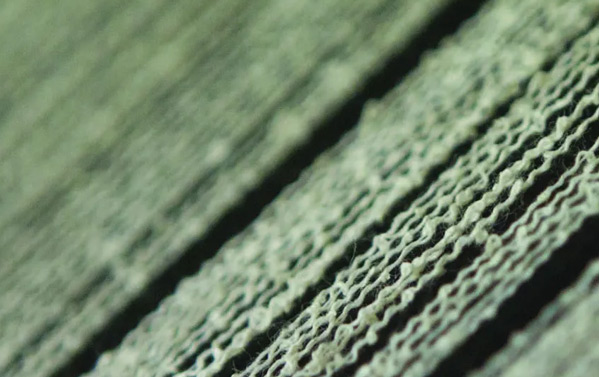 Eco-Friendly Fabric Technology and Sustainable SystemA green technology system covering recyclable design, biodegradable fabric, bio-based raw materials and low-water dyeing, with OEKO-TEX, RECYCLED and ISO certifications.View Product →
Lab data on a new swatch is a promise, not a result. Ask for the numbers after the conditions your product will actually meet.
Waterproof and breathable material rewards clear thinking more than clever marketing. Decide on the protection level first, then the breathability target, then the construction — and only afterwards argue about weight and price. If you would like to talk through a specification, our team is always happy to look at a garment brief and suggest where the sensible trade-offs sit. That conversation usually saves more time than a comparison chart ever will.
 Custom Outdoor Functional Fabric Manufacturers
Military Fabric Suppliers


 English
 Español
 عربى
 中文简体
